
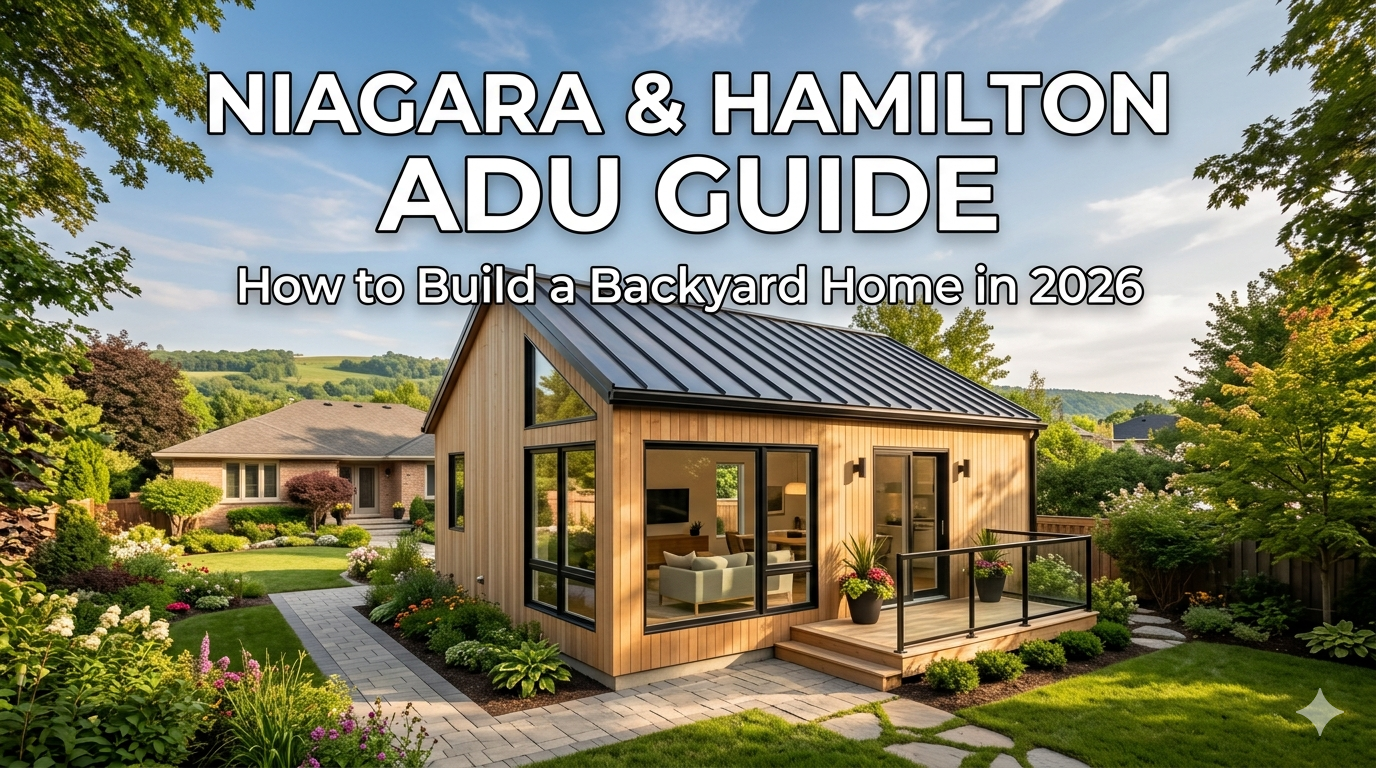
Accessory dwelling units are quickly becoming one of the most practical housing solutions across Niagara Region and Hamilton.
As housing prices continue to rise, many homeowners are realizing they can create additional living space without buying another property. A backyard home, garden suite, or detached ADU allows families to add a second residence on land they already own.
These small homes create flexible housing options while adding long term property value.
But building a legal ADU in Niagara or Hamilton requires careful planning. Zoning regulations, servicing requirements, and permit approvals all play a role in determining what can actually be built.
This guide explains what homeowners need to know before starting an ADU project.
Why ADUs Are Growing in Niagara and Hamilton
Cities across Ontario are encouraging gentle density to help address housing shortages. Accessory dwelling units support this goal by adding housing without changing the character of existing neighbourhoods.
For homeowners in Niagara Region and Hamilton, ADUs offer several advantages.
- Create space for aging parents or adult children
- Generate rental income
- Increase property value
- Use underutilized backyard space
- Provide flexible housing for future needs
Across Southern Ontario, many municipalities now allow up to three residential units on a single property when zoning and servicing requirements are met.
Common Challenges When Building an ADU
Building a backyard home sounds simple, but many projects run into problems because homeowners underestimate the complexity of the process.
Zoning Restrictions
Every municipality has specific zoning rules that regulate where ADUs can be built. Common requirements include:
- Minimum lot sizes
- Rear and side yard setbacks
- Maximum building height
- Lot coverage limits
- Parking requirements
Properties that do not meet these rules may require a minor variance.
Utility and Servicing Requirements
Adding another home to a property means ensuring proper servicing.
Projects may require:
- Sewer and water connections
- Electrical upgrades
- Drainage planning
- Grading plans
These requirements vary between Niagara municipalities and the City of Hamilton.
Permit Drawings and Engineering
One of the most common reasons ADU permits get delayed is incomplete or inaccurate plans.
Permit submissions typically require:
- Architectural drawings
- Structural engineering
- Mechanical layouts
- Electrical planning
- Site plans and grading
Working with experienced ADU designers helps avoid months of delays.
Example ADU Scenario in Niagara or Hamilton
Many properties across older neighbourhoods in Niagara Falls, St. Catharines, Welland, and Hamilton have large backyards that are ideal for detached ADUs.
A typical backyard home might include:
- 500 to 800 square feet of living space
- One or two bedrooms
- Full kitchen and bathroom
- Private entrance and outdoor space
These units can be used as rental housing or multi generational living space. Demand for small, independent housing options continues to grow across the region.
Legal Requirements for Building an ADU in Niagara or Hamilton
Before starting construction, homeowners must ensure the project complies with both zoning bylaws and the Ontario Building Code.
A building permit is required and plans must typically include:
- Architectural drawings
- Structural plans
- Mechanical and electrical layouts
- Site servicing plans
- Fire separation details
Municipalities review these submissions before approving construction. Because every property is different, the first step is usually a zoning or feasibility review.
The Province of Ontario also provides guidance on building laneway houses and secondary units as part of its housing strategy.
Why Work With an Experienced ADU Builder
ADU projects involve design, zoning, engineering, permitting, and construction. Working with a team that understands the full process can prevent costly mistakes.
Experienced ADU builders help homeowners:
- Evaluate property feasibility
- Navigate zoning requirements
- Prepare permit drawings
- Coordinate engineering and servicing
- Manage construction from start to finish
This integrated approach significantly reduces delays and unexpected costs.
Is Your Property Suitable for an ADU?
Many homeowners are surprised to learn their property may qualify for a backyard home. Properties in Niagara Region and Hamilton often have larger lots that make detached ADUs more feasible than in denser cities.
The only way to know for sure is to review zoning, servicing, and site conditions. If you are considering adding a second home to your property, the first step is simply understanding what is possible.
Contact Smart Home Designs Niagara to start the conversation: https://www.smarthomedesign.ca/get-a-quote/